Biographical Sketch:
Yinchen Hao is a Ph.D. candidate in Applied Physics at Yale University, working under the supervision of Professor Jack Harris. His current research focuses on cavity optomechanics in levitated superfluid helium droplets, where he investigates the dynamics and optical properties of magnetically levitated liquid helium drops in vacuum. His work integrates precision optical experimentation, ultra-high vacuum systems, cryogenics and strong magnetic fields.
Before joining Yale, Hao earned his B.S. in Physics from Shanghai Jiao Tong University through the Zhiyuan Honors Program, graduating first in his cohort. During his undergraduate studies, he conducted research in time-resolved ultrafast spectroscopy, contributing to the construction of optical instrumentation, development of automated control software, and analysis of reflectance dynamics in solid-state materials.
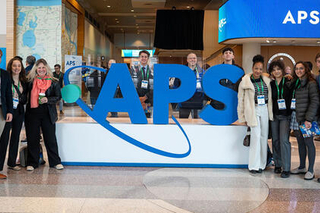
At Yale, Hao has also carried out research on artificial spin ice systems with Professor Peter Schiffer, combining magnetic force microscopy, micromagnetic simulations, and Monte Carlo methods to study topological defects and emergent phenomena. This work contributed to a publication in Proceedings of the National Academy of Sciences. Hao has presented his research at international conferences, including a contributed talk at the 2025 APS Global Physics Summit.
Research:
Superfluid helium has many unique properties that make it a remarkable material for quantum optomechanics experiments. By magnetically levitating millimeter-scale drops of superfluid in vacuum, we are exploring new ways to exploit these properties and to address outstanding questions in fundamental fluid mechanics.
Education:
Shanghai Jiao Tong University, B.S. in Physics
Selected Publications:
A. Hurben,Y. Hao,I. Chioar,L. Yang,N. Strandqvist,M. Saccone,N.S. Bingham,J. Ramberger,C. Leighton,C. Nisoli, & P. Schiffer, Fractional magnetic charges and channeling of Faraday lines by disclinations in artificial spin ice, Proc. Natl. Acad. Sci. U.S.A. 122 (7) e2415101122, https://doi.org/10.1073/pnas.2415101122 (2025).