
Wright Lab Exploration Wing
On August 3, Wright Lab opened its doors to the new Wright Lab Exploration Wing (WLE). The Exploration Wing is a new addition to Wright Lab and has been under construction since June 2024. It includes state-of-the-art research laboratories, office and interaction spaces, and technical facilities along with the new Advanced Instrumentation Development Center (AIDC). Together, WLE and AIDC will enhance the current capabilities of Wright Lab and enable frontier research and innovation well into the future.

-
Research & Development
Wright Lab supports a broad research program in experimental nuclear, particle, and astro-physics, with an emphasis on instrumentation development and quantum sensing.
-
Preparing Future Scientists
Through hands-on research experiences, workshops, mentoring, scientific seminars, and career development activities, we train the next leaders in science and technology.
-
Research Community
Wright Lab fosters community among all students, staff, & faculty. Our goal is to provide a safe, supportive, and productive environment for research, teaching, and mentoring.
-
Exploring Quantum & AI
We lead a variety of efforts to develop quantum sensing tools & techniques for fundamental science and are engaged in a diverse spread of AI and machine learning initiatives.


Subscribe to “Wright Lab Events” (1-5x/week) or “Wright Lab News” (1-5x/year) for updates on events & news.
News
-
Farr selected for Department of Energy graduate research program (SCGSR)
Graduate student Jesse Farr has been awarded a DOE SCGSR grant to work with Stefania Stucci at BNL on the ATLAS Inner Tracker upgrade.
-
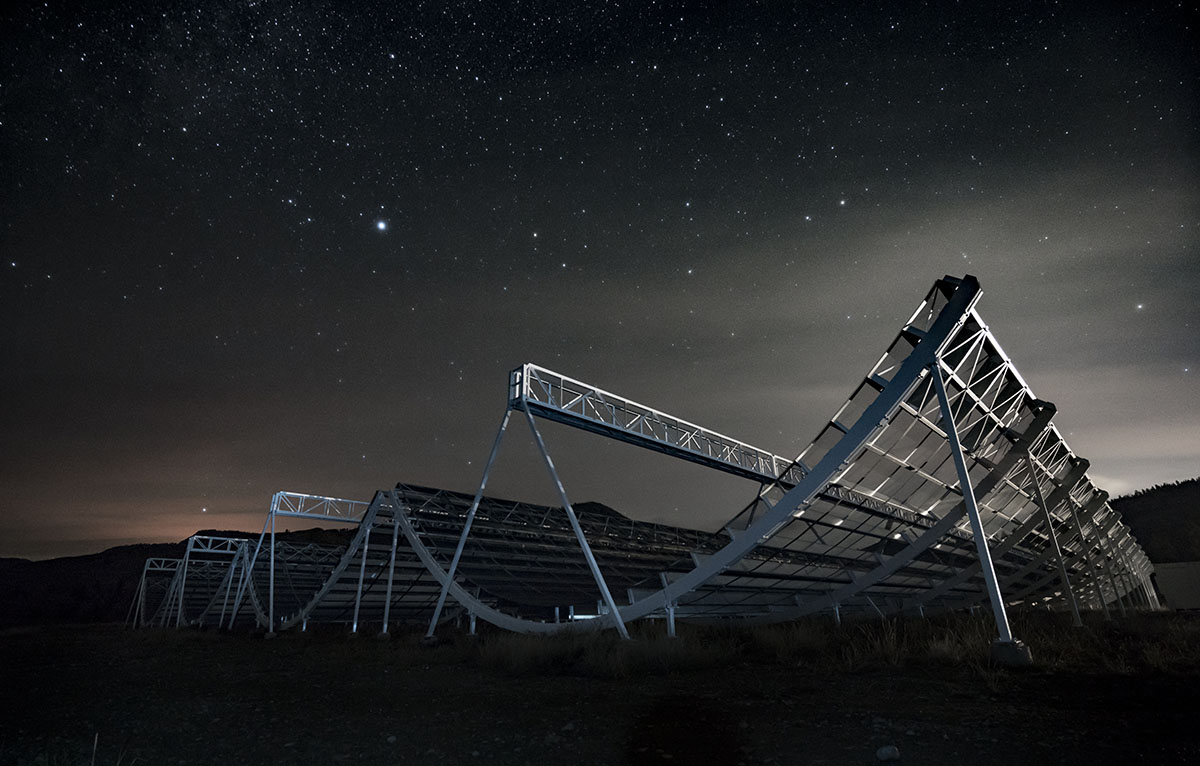
Insights & Outcomes CHIME time, AI transparency in research, ‘Evolution’ on PBS, and faculty honors
Yale researchers help prove the utility of an innovative radio telescope in understanding the expanding universe and more.
-
A Yale physicist — and IceCube member — salutes this year’s Nobel Prize winner
Maruyama was part of the construction and commissioning team for the IceCube experiment, whose PI, Francis Halzen, won the 2026 Nobel Prize in Physics


Funding
Wright Laboratory gratefully acknowledges support from the Alfred P. Sloan Foundation; the Department of Energy, Office of Science, High Energy Physics and Nuclear Physics; the Gordon and Betty Moore Foundation; the Heising-Simons Foundation; the John Templeton Foundation; the Krell Institute; the National Science Foundation; the Simons Foundation; and Yale University.